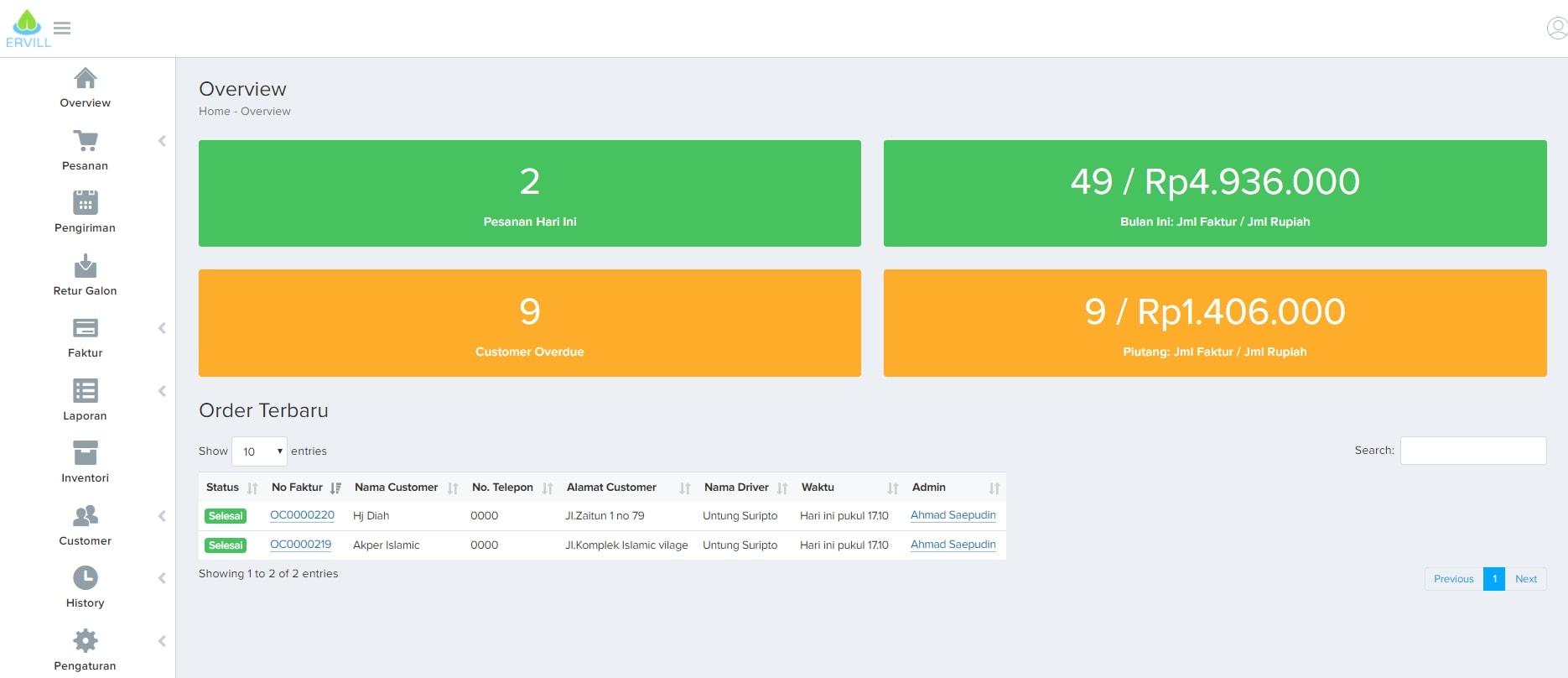
Ervill logistics operations system
Client
ErvillCategory
Logistics SystemProject Type
Logistics operations systemBefore
Logistics coordination relied on heavier manual updates and fragmented operational visibility.
After
Operational information becomes easier to review, teams coordinate through a clearer workflow, and logistics reporting gains more structure.
Bridge
Solutionesia turned the operational process into a usable system flow so the team could track information, coordinate tasks, and review reporting more clearly.
Challenges
Status visibility needed structure
Operational status was harder to track consistently across the workflow.
The workflow depended on too many manual updates
Coordination carried too much manual dependency.
Reporting lacked a clear operational flow
Reporting needed a cleaner system layer to support decisions.
Solution Highlights
Operational visibility
The system improved how operational information could be reviewed.
Workflow coordination
Interfaces supported a more structured coordination flow.
Execution credibility
The project still acts as proof of real-world systems execution.
Client Introduction
Ervill is kept as legacy proof that Solutionesia has delivered systems in more operational environments where coordination and reporting matter.
Project Journey
Operational systems are still a strong proof source because automation projects live or die on workflow clarity, ownership, and visibility.
This legacy project demonstrates those delivery muscles even though the new positioning now leads with automation outcomes.
Core Development
The system work focused on turning operational steps into a clearer workflow supported by usable interfaces and structured reporting visibility.
Legacy delivery proof included:
- Workflow support for logistics operations
- Operational visibility through system interfaces
- Reporting-related structure for the team
Proof Note
Legacy delivery retained as an honest proof layer while Solutionesia shifts the front-end offer toward automation and AI implementation.
Proof Snapshot
The Ervill system delivery proved Solutionesia could translate operational complexity into a usable workflow for logistics coordination and reporting.
Ervill — Legacy delivery proof
Want a similar result in your business?
Book the automation audit and we will map the best workflow to fix first.
Book Audit